Innovative diagnostics for more effective cancer treatment is now available in Estonia

Exacta is a comprehensive molecular-genetic test for the in-depth diagnosis of complex tumors.
The study combines various types of unique biomarker analyses to provide the most comprehensive overview possible of the tumor’s characteristics and behavior
Uuring ühendab erinevat tüüpi unikaalseid biomarkeri analüüse, et anda võimalikult terviklik ülevaade kasvaja omadustest ja käitumisest.
Exacta helps answer important questions:
- How aggressive is the tumor?
- Which chemotherapy drugs is the tumor most likely to be sensitive or resistant to?
- Which drugs or drug combinations are likely to be the most effective?
- Which biological processes and signaling pathways are dominant in the tumor?
EST Exacta aitab vastata olulistele küsimustele:
- Kui agressiivne on kasvaja?
- Milliste keemiaravimite suhtes on kasvaja kõige tõenäolisemalt tundlik või resistentne?
- Millised ravimid või ravimite kombinatsioonid võiksid olla kõige tõhusamad?
- Millised bioloogilised protsessid ja signaalirajad kasvajas domineerivad?
Obtaining such detailed information about a tumor is comparable to having access to the opponent’s battle plan before entering the fight. It enables cancer to be treated more precisely and brought under control more effectively, especially in situations where standard treatment guidelines are unavailable. Exacta provides a comprehensive overview of the cancer and is one of the most extensive multi-omics tests currently used in clinical practice.
Sellise põhjaliku teabe saamine kasvaja kohta on võrreldav olukorraga, kui enne lahingut saadakse vastase tegevusplaan. See võimaldab vähki sihipärasemalt ravida ja tõhusamalt kontrolli alla saada, eriti olukordades, kus ravijuhised puuduvad. Exacta annab vähist tervikliku ülevaate ning on üks ulatuslikumaid kliinilises kasutuses olevaid multi-oomika uuringuid.
Exacta is not intended to replace the diagnostic services provided through the national health insurance system, but rather to expand diagnostic options for patients whose cancer is rare, aggressive, has a poor prognosis, or does not respond to standard treatment guidelines. By combining multiple layers of biological information into a clinically interpretable whole, Exacta helps identify additional treatment options.
EST Exacta eesmärk ei ole asendada riiklikus ravikindlustussteemis pakutavat diagnostikat, vaid laiendada diagnostilisi võimalusi patsientidel, kelle vähk on haruldane, agressiivne, halva prognoosiga või ei vasta tavapärastele ravijuhistele. Mitme bioloogilise infokihi ühendamisel kliiniliselt tõlgendatavaks tervikuks aitab Exacta tuvastada täiendavaid ravivõimalusi.
Exacta is based on years of research, innovation, patented methods, and clinical studies.
EST Exacta põhineb aastatepikkusel teadustööl, innovatsioonil, patenteeritud meetoditel ja kliinilistel uuringutel.
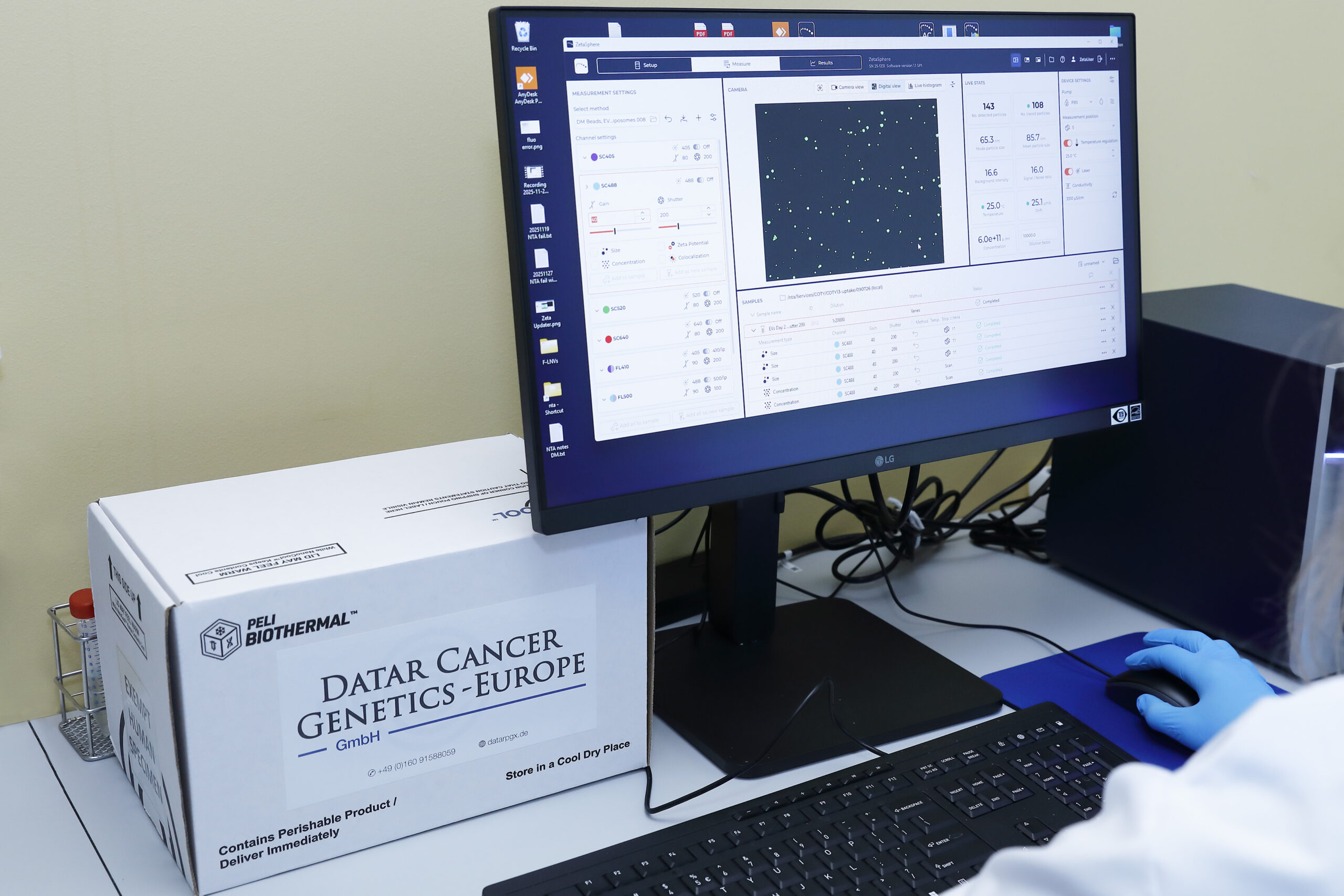
Comprehensive cancer diagnostics
Detecting genetic alterations in a tumor alone is not always sufficient to effectively guide personalized cancer treatment. Although advances in modern precision oncology and immunotherapy have significantly expanded treatment options and improved outcomes for many patients, the molecular profile of every tumor does not necessarily reveal an actionable therapeutic target, and not all patients respond to immunotherapy.
Therefore, a comprehensive understanding of the biological activity of the tumor is becoming increasingly important — including which processes are active within the tumor, which mechanisms influence disease progression, and which factors may determine treatment response or the development of resistance.
EST
Kasvaja geneetiliste muutuste tuvastamisest üksi ei piisa alati personaalse vähiravi tõhusaks suunamiseks. Kuigi kaasaegne täppisvähiravi ja immunoteraapia areng on oluliselt laiendanud ravivõimalusi ning parandanud paljude patsientide ravitulemusi,
ei võimalda kõigi kasvajate molekulaarne profiil leida ravitavat sihtmärki ning kõik patsiendid ei reageeri immunoteraapiale. Seetõttu muutub järjest olulisemaks kasvaja bioloogilise aktiivsuse terviklik mõistmine – millised protsessid kasvajas
toimivad, millised mehhanismid mõjutavad haiguse kulgu ning millised tegurid võivad määrata ravivastuse või resistentsuse kujunemise.
DNA sequencing provides insight into the genetic alterations present in a tumor, while RNA sequencing adds a functional dimension by revealing which genes are actively expressed and which biological pathways may influence tumor behavior, progression, and drug resistance.
This multilayered molecular information enables more precise characterization of tumor biology and supports better-informed treatment decisions and the implementation of personalized cancer care.
EST DNA sekveneerimine annab ülevaate kasvajas esinevatest geneetilistest muutustest, samas kui RNA sekveneerimine lisab funktsionaalse mõõtme, näidates, millised geenid on aktiivselt avaldunud ning millised bioloogilised rajad võivad mõjutada
kasvaja käitumist, progresseerumist ja ravimresistentsust.
Mitmetasandiline molekulaarne informatsioon võimaldab kasvaja bioloogiat täpsemalt iseloomustada ning toetab paremini põhjendatud raviotsuste tegemist ja personaalse vähiravi rakendamist.
Treatment Personalization Using Liquid Biopsy
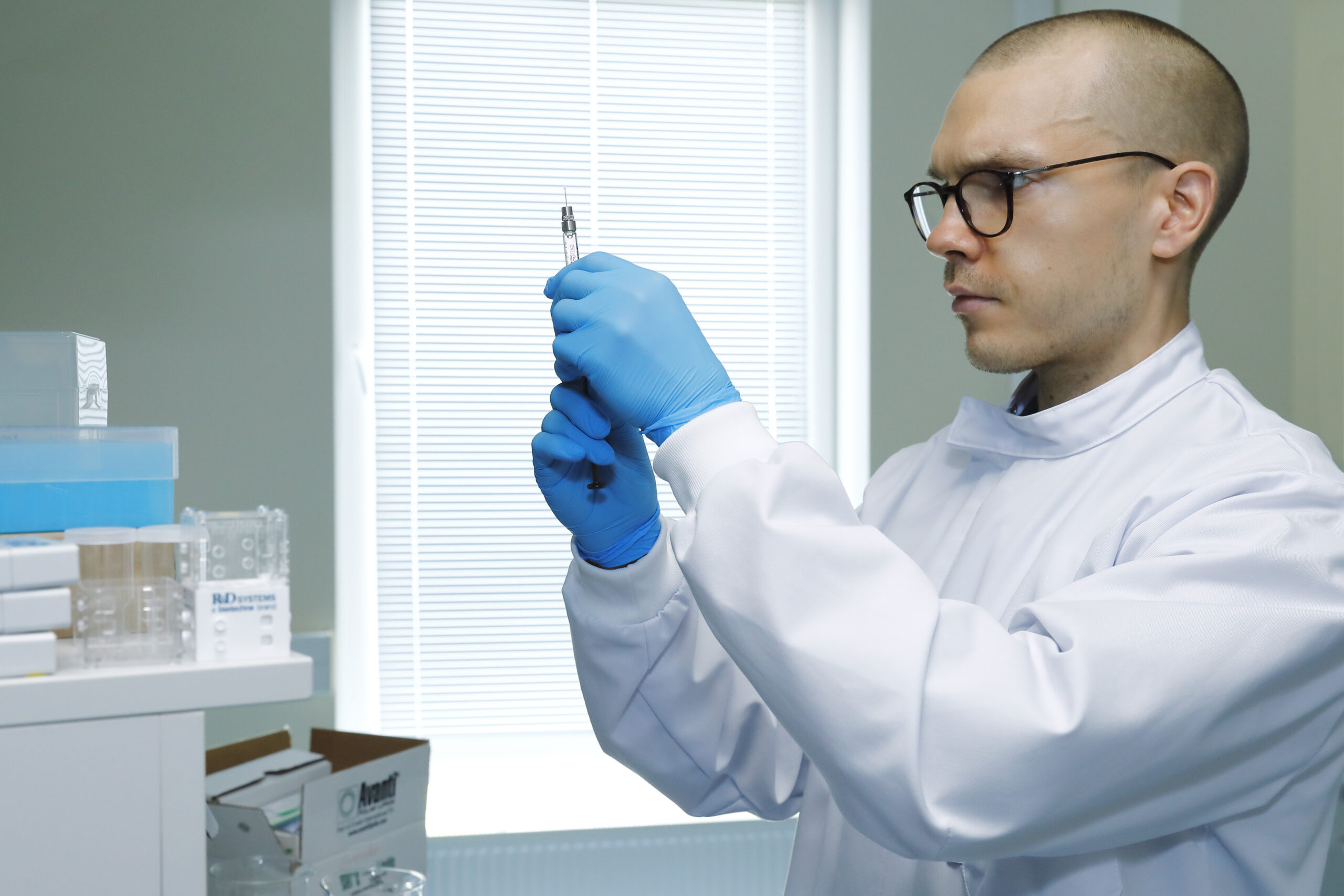
Cancer is a highly complex biological system that continuously evolves. During the course of the disease, tumor cells can change and adapt, potentially leading to disease progression or treatment resistance. If some time has passed since a tumor tissue sample was collected, it may no longer accurately reflect the current state of the active disease. Liquid biopsy is a fast and safe method for obtaining cancer-related biomarkers from the body, enabling the current state of the tumor to be assessed through their analysis.
Several cancer-related biomarkers can be found in human blood:
- circulating tumor DNA (ctDNA), which originates from the tumor;
- circulating tumor cells (CTCs);
- exosomes.
EST Vähk on väga keeruline bioloogiline süsteem ja see areneb pidevalt. Kasvajarakud võivad haiguse jooksul muutuda, kohaneda ja seetõttu põhjustada haiguse progresseerumist või raviresistentsust. Kui kasvajakoe proovi võtmisest on aega möödas, ei pruugi see enam peegeldada aktiivse haiguse tegelikku seisundit. Vedelbiopsia on kiire ja ohutu meetod, et saada organismist kätte vähiga seotud biomarkereid, mille analüüs võimaldab hinnata kasvaja hetkeseisundit.
Inimese veres leidub mitmeid vähiga seotud biomarkereid:
- kasvajast pärinev rakuvaba DNA (ctDNA);
- ringlevad kasvajarakud (CTC);
- eksosoomid.
Kõik need kannavad väärtuslikku ja üksteist täiendavat teavet kasvaja kohta.
Datar Cancer Genetics has developed innovative liquid biopsy methods and is one of the leading companies in this field.
Their technologies are used for:
- early cancer detection (Trucheck™);
- treatment monitoring (CancerTrack);
- diagnostic support for rare and clinically complex tumors (Exacta).
EST Datar Cancer Genetics on välja töötanud uuenduslikud vedelbiopsia meetodid ning on selle valdkonna üks juhtivaid ettevõtteid.
Nende tehnoloogiaid kasutatakse:
- vähi varajaseks avastamiseks (Trucheck™);
- ravi jälgimiseks (CancerTrack);
- haruldaste ja kliiniliselt keerukate kasvajate diagnostiliseks toetamiseks
(Exacta).
When should Exacta testing be considered?
◉ initial treatment has not been effective
◉ the cancer has recurred
◉ the disease is aggressive, advanced, or metastatic
◉ the cancer is rare or difficult to treat
◉ standard treatment options are limited or unclear;
◉ there is a high risk of treatment failure.
The Exacta treatment report is available within approximately 14 days.
Comprehensive
Parameters and Methods of Analysis
| Tumor DNA analysis | 511 genes (when studying tumor tissue biopsy material)/411 genes (when studying liquid biopsy - blood sample) |
| Mutations and gene amplifications | ✓ |
| Gene synthesis/rearrangements | 51 genes (tumor tissue biopsy)/12 genes (liquid biopsy – blood sample) |
| Tumor gene expression | 20,805 genes |
| Cellular functional pathways according to KEGG | ✓ |
| Chemosensitivity test | Evaluating the effectiveness of up to 60 different chemical preparations |
| Liquid biopsy – freely circulating tumor DNA | ✓ |
| ICC immunocytochemistry (mTOR, VEGFR, EGFR, etc.) | ✓ |
| Microsatellite instability (MSI / MMR) | ✓ (tissue biopsy / liquid biopsy) |
| Tumour mutational burden (TMB) | ✓ |
| Relevant IHC, PD-L1, AR etc. | ✓ (tissue biopsy) |
| Circulating tumor cells (CTCs) | ✓ |
| Pharmacogenetic guidance | ✓ |
| Immunotherapy guidance | ✓ |
| Limit of detection (MAF) | 0.1 % (cfTNA) |
| Sensitivity at 0.1 % MAF (cfTNA) | 97.06 % |
| Positive Predictive Value | 100 % |
Liquid Biopsy Tests
Screening Trucheck
Exacta
Chemoscale